
Part A: Research
Editorial Research Brief :
My brief was to research and explore the area of Editorial Illustration and publishing. My task is to find research examples withing the Editorial field related to 4 areas : Ideas and Concepts, Image Making Processes, Magazine Design and Magazine Topic and Genre.
Ideas and Concepts

<> Charlie Kingshott - Entry 1
20/11/24
Editorial illustration is artwork created to accompany articles, essays, or stories in print or digital media. It visually represents or enhances the narrative, often using symbolism, humour, or metaphor to clarify complex ideas, evoke emotions, or provide commentary on the subject matter, complementing the written content.
Ideas and concepts in editorial illustration involve visual interpretations of the themes, messages, or arguments in the accompanying text. They are crucial for enhancing understanding, sparking emotions, and engaging readers, making complex issues more accessible and memorable through creative representation.
This image on the left, for example, is from an illustrator called Jacob Stead. This piece is about a process called Telehealth which is about connecting doctors and patients through the phone to provide health care, specifically during the pandemic when face to face consultations were very limited. The concept of this illustration is very clear and simplistic but yet very powerful and easy to understand. It clearly shows a patient and a doctor stepping out of their phones and onto a pathway towards each other.
I really like how the artist uses shades of blue and other technological colours for the pathway and the background to represent that they are in the phones, but then for the real world Stead uses bright bold colours to represent the real world.
The artist here has clearly planned and executed his ideas and concepts well ensuring a complex issue that may be hard for people to grasp or understand has been made more accessible and understandable.
- Charlie Kingshott
20/11/2024
<> Charlie Kingshott - Entry 2
20/11/24
This artist deals with ideas and concepts differently but in a very interesting way. Patrick Boyer is an editorial illustrator known for his bold, graphic style and distinctive use of colour. His work often combines surrealism and symbolism to address complex societal issues, blending humour with critique, and appearing in major publications like The New York Times.
This piece specifically is an article about bicycles and more specifically the history of the bike from its invention to present day. It is titled 'Bicycle Mania - How a once-hated contraption won over the world'. This is important because this is the title that Patrick Boyer had to develop his Ideas and concepts.
I really like how the artist created a piece that sticks with the word 'mania' in the use of crowded imagery with lots going on. Another Idea that the artist executed well is the use of imagery ranging in time from the invention of the bicycle to the present day. This idea also sticks to the articles theme of the history of bikes.
- Charlie Kingshott
20/11/2024


<> Charlie Kingshott - Entry 3
20/11/24
This next artist, Philipp Beck, has very strong concepts and ideas that I really like and enjoy. I am very interested in the political and environmental side of editorial illustration, so I am very intrigued by this artist.
Philipp Beck is a digital illustrator known for his minimalist, geometric style and exploration of form. His work often blends abstract shapes with dynamic compositions, creating visual narratives that evoke emotions and provoke thought. Beck's concepts focus on the intersection of simplicity and complexity, offering both clarity and depth.
This is an illustration to show the effects of global warming and the dangers it poses. The idea of placing a city upon a hob really connects the overall danger of global warming to the average person by showing that they have a direct hand in the overall action. This is a very powerful way to connect large political and environmental issues to the general viewer and help reach more people. I am very inspired by this artist and his ideas and ways of engaging the viewer.
- Charlie Kingshott
20/11/2024
Image Making Processes
<> Charlie Kingshott - Entry 4
21/11/24
Eiko Ojala is a renowned editorial illustrator celebrated for his intricate paper-cutting technique and digital illustrations. His image-making process begins with sketches, which he refines digitally, layering textures and shadows to simulate the depth of real paper cut-outs. Ojala carefully balances form and colour to create clean, visually striking compositions. Using light and shadow, he adds dimensionality to his work, often making flat images appear sculptural. His attention to detail and emphasis on the tactile nature of paper cutting make his illustrations stand out, offering a unique blend of traditional craftsmanship and modern digital artistry.
I specifically like his ability to create imagery inside the negative and positive space creating heavily layered pieces that have muiltiple messages all woven into one image.
- Charlie Kingshott
21/11/2024

.jpg)
<> Charlie Kingshott - Entry 5
21/11/24
Bruce Angrave is an editorial illustrator known for his detailed, intricate illustrations often infused with wit and humour. His image-making process begins with pencil sketches, where he explores composition and narrative. After refining the drawing, Angrave adds layers of texture and depth using digital tools, blending traditional techniques with modern technology. His distinctive line work and attention to detail bring his illustrations to life, often using bold contrasts and dynamic elements to enhance the visual storytelling. Angrave's process is a seamless fusion of hand-drawn precision and digital enhancements, creating engaging and thought-provoking visuals.
I really like the blend Bruce Angrave makes between traditional and digital art that creates this perfect outcome in this modern world.
- Charlie Kingshott
21/11/2024
<> Charlie Kingshott - Entry 6
21/11/24
Jiyeun Kang is an illustrator recognized for her vibrant, intricate illustrations that often explore themes of identity, nature, and everyday life. Her image-making process begins with research and conceptualization, where she gathers inspiration from personal experiences, photography, and visual references. Kang then sketches her ideas by hand, focusing on composition and form. Once satisfied with the initial design, she transitions to digital tools, where she refines the image, adding texture, colour, and detail. Kang often incorporates hand-drawn elements, blending them seamlessly with digital techniques to create a unique, organic feel in her work. Her process emphasizes bold colour palettes and layered textures, which bring depth and richness to her illustrations. She carefully considers the visual impact of each element, ensuring that her images are not only aesthetically striking but also narratively engaging, capturing the essence of the stories she illustrates.
- Charlie Kingshott
21/11/2024

Magazine Design
_edited.png)
<> Charlie Kingshott - Entry 7
22/11/24
Olimpia Zagnoli is an Italian illustrator known for her bold, colourful style and distinctive approach to visual storytelling. Her work often features minimalistic yet striking page layouts, where clean lines and geometric shapes dominate the design. Zagnoli uses negative space effectively, creating a sense of balance and harmony within her compositions. Her illustrations are characterized by flat, graphic forms, often incorporating simplified figures and abstract elements that convey a strong sense of emotion and narrative.
When it comes to fonts, Zagnoli tends to favor playful, rounded typefaces that complement the fluidity and vibrancy of her illustrations. Her typography often blends seamlessly with the visual elements, contributing to the overall aesthetic while reinforcing the tone of the story or theme. The fonts are often bold and straightforward, enhancing legibility and ensuring that the text stands out against her dynamic visuals.
Zagnoli's mastery lies in her ability to merge illustrations with text and layout, creating cohesive and engaging visual stories that captivate viewers. Her approach is modern and energetic, making her work instantly recognizable.
- Charlie Kingshott
22/11/2024
<> Charlie Kingshott - Entry 8
22/11/24
La Noir is a visually striking magazine that utilizes imagery, text, and colour to create an immersive, dramatic aesthetic. The magazine's design often features high-contrast photography, with bold, atmospheric images that capture moody, cinematic moments. Black-and-white or muted colour palettes are commonly used, enhancing the mysterious and sophisticated tone of the publication. The photography is carefully curated to evoke emotion and narrative, often framed within minimalistic compositions that allow the images to take centre stage.
Text in La Noir is strategically placed, with elegant, modern fonts that complement the editorial content. Typography is clean and minimal, ensuring readability while maintaining the magazine's refined aesthetic. The use of colour is subtle but impactful, with occasional pops of colour, like deep reds or golds, used to highlight key elements or create visual emphasis. This harmonious balance of imagery, text, and colour enhances the magazine’s atmosphere, creating a cohesive, visually compelling experience for the reader.
- Charlie Kingshott
22/11/2024


<> Charlie Kingshott - Entry 9
22/11/24
Vogue magazine is renowned for its sophisticated and elegant design, expertly balancing imagery, text, font, and colour to create an eye-catching visual experience. The cover imagery is often bold, showcasing high-fashion photography with iconic models and striking compositions. These images are typically full-page and highly stylized, capturing the essence of luxury and exclusivity.
Text in Vogue is minimal yet impactful, with carefully selected editorial content that complements the visuals. The magazine's font choices are timeless and refined, with serif typefaces used for headlines and clean, sans-serif fonts for body text, maintaining clarity and sophistication.
Colour plays a vital role in Vogue’s design, with covers frequently featuring rich, vibrant hues or classic black-and-white schemes. The colour palette often reflects seasonal trends, creating a connection between the visual design and fashion culture. Overall, Vogue uses a harmonious blend of these elements to maintain its status as a leading fashion authority.
- Charlie Kingshott
22/11/2024
Personal Research
For Part B of this project I am planning to create a zine and therefore I want to research some zine artists to help further my project and give me more knowledge on the process and the style that these artists use. I am more interested in the hand drawn zines rather than the digital printed ones because I will be hand drawing the lines
Jean McEwan:
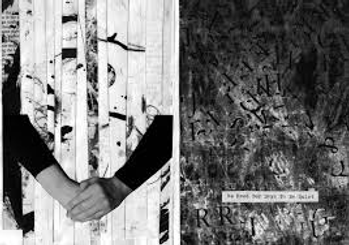
Jean McEwan is a UK-based visual artist celebrated for her innovative and community-oriented approach to zine-making. Her work emphasizes collaboration, accessibility, and social engagement, blending personal expression with collective narratives. McEwan uses hand-drawn elements, collage, text, and photography to create unique, visually compelling zines that explore themes such as identity, memory, place, and social justice.
McEwan’s zine-making process is deeply rooted in a DIY ethos, embracing imperfection and the handmade quality that defines the zine culture. She often begins her projects by gathering materials that reflect a specific theme or topic, including personal photographs, found imagery, and snippets of text from books, newspapers, and magazines. Hand-drawn sketches and handwritten text are common features in her work, adding a personal, intimate touch to each piece. Her artistic style is dynamic and layered, with a tactile quality that invites readers to engage not just visually, but emotionally.
Her zines are known for their thoughtful use of mixed media, combining hand-drawn illustrations with cut-and-paste collage techniques. She frequently experiments with composition, overlapping images and text to create a sense of depth and movement. McEwan’s zines often challenge conventional narratives, offering alternative perspectives on cultural and social issues. Her work is also interactive—she encourages readers to interpret and relate to her zines in personal ways, making her creations both reflective and participatory.
The process behind McEwan’s zines often involves collaborative workshops, where she engages with communities to create collective publications. In these workshops, participants are guided through the basics of zine-making, from brainstorming ideas to the physical assembly of the final product.
I am really fond of McEwan's process and how she gets to the final outcome. My last project wasn't well organised and the process of getting to the final outcome was a bit hectic. I am inspired by the process that this artist follows and hope it will positively affect my project If I follow this process. I also really like this artists use of collage in her zine pages and I think this is something I may experiment with during part B of my project.


Thomas N. Perkins IV
Thomas N. Perkins IV is a visual artist and designer best known for his vibrant, dynamic sketch zines that highlight his hand-drawn art and distinct creative style. A veteran of the animation industry, Perkins brings his extensive experience in character design and storytelling into his zine work, creating visually striking collections of sketches that explore imaginative worlds, fantastical creatures, and bold character concepts. His sketch zines are celebrated for their energy, inventive forms, and expressive line work.
Perkins’ process begins with traditional hand-drawn sketches using pen, ink, and markers. He often works spontaneously, allowing his creativity to flow freely as he develops intricate designs and playful compositions. His sketch zines frequently feature a mix of loose, gestural drawings alongside more refined illustrations, giving readers insight into his artistic journey from raw concept to polished form. Perkins also experiments with themes, focusing on science fiction, fantasy, or horror motifs, and infuses his work with humor and wit.
The outcomes of his zines are highly collectible art books that offer a glimpse into his imaginative world. Produced in limited editions, his sketch zines appeal to both fans of animation and art collectors, showcasing the raw artistry behind visual storytelling and the joy of drawing as a creative process.
I am very inspired by the sketches in Perkins zines and the bold character concepts as well as the line work that brings his sketches to life. I want to only use hand drawn and painted elements in my zine and that Is something that this artist also does and thats why I am inspired by Perkins. His process is made up of traditional hand drawn sketches using ink and markers so during Part B I will be using this process during my experimentation phase.
Part A Evaluation:
For Part A of this project I was asked to explore and research 4 different areas of editorial illustration; Ideas and concepts, image making processes, magazine design topic and genre. As well as some personal research relating to my project in more depth.
For Ideas and concepts I researched artists like Jacob Stead, Patrick Boyer and Phillip Beck, I discovered that Stead liked to take a complex issue and split it down into comprehensible ideas and concepts and then use those to work towards an outcome and I find this to be a very smart way of dealing with a large brief and this is going to be something I take with me into the Part B of this project.
For the Image making process I researched Eiko Ojala, Bruce Angrave and Jiyeun Kang all of whom face the image making process differently, I specifically liked Bruce Angraves works and process as he used. This artist used traditional image making processes before then digitally altering and editing them which Is something I want to explore further in this project.
For the Magazine design topic and genre I explored the artist Olimpia Zagnoli as well as the magazines, Vogue and La Noir. I really like the work of Olimpia Zagnoli and her abillity to merge text and image together to create a comprehensive page that all works as one. This is something that when it comes to my Part B i hope to be able to do for my cover.
I then explored a few zine artists as that is what I want to do for my part B final outcomes. I want to go into Part B well informed and knowlegable about how to create zines and the process that the artists use so I could create the best outcome possible. I researched artists, Jean McEwan and Thomas N. Perkins both of whom I really like, but Perkins work really inspired me in his line work and traditional image making and I want to take that forward into Part B.
Throughout Part A I have researched a lot of artists from a range of perspectives all of which will help me when it comes to Part B. I think I have researched in depth and from enough sources that I am fully informed on all the topics mentioned in the brief.